
In-Flight Comfort & Wellness Guide 2026
The cabin lights dim to a soft amber glow. You’re 37,000 feet above the Pacific, 14 hours into a journey that feels both endless and fleeting. Your body groans for rest, but your mind pulses with the wrong rhythm—trapped between time zones, fighting the invisible battle of jet lag before you’ve even landed. This is the reality of modern long-haul travel, and it’s why in-flight comfort matters more than you think when learning how to avoid jet lag.
What if you could land feeling refreshed instead of wrecked? What if your 15-hour flight became a sanctuary of rest rather than a torture chamber of discomfort? The secret isn’t just in choosing the right seat or bringing the best travel neck pillow—it’s about mastering neurosurfing (the art of switching brainwave states to rest deeper in the air), optimizing your body’s prep work, and treating your flight as a wellness journey. These are proven tips to avoid jet lag that change everything.
Whether you’re a family navigating travel with kids, a solo traveler seeking independence without exhaustion, a luxury traveler who expects premium comfort, a budget traveler maximizing value, a couple planning romantic adventures, or an adventure traveler racing against time, this guide transforms how you fly. Avoiding jet lag isn’t luck—it’s science, strategy, and self-care combined. This is your complete guide to how to travel the world without jet lag.
From pre-flight body preparation to post-landing recovery, from in-flight skincare to circulation exercises, from smart hydration to brainwave training, we’re covering everything. You’ll discover expert tips on how to get over jet lag quickly and strategies for reducing jet lag that work. Understanding how long does jet lag last is key: typically 3–5 days without preparation, but just 1–2 days with the right strategies. This is your ultimate long-haul flight wellness guide for 2026. Let’s make every flight a step toward adventure, not a barrier. Ready for travel smart, sleep well: conquer jet lag?
1. Why In-Flight Comfort Matters for Your Health and Travel Experience
In-flight comfort isn’t luxury—it’s health. When analyzing how to prevent jet lag, comfort is your foundation. When you spend 10+ hours compressed in a seat at 37,000 feet, your body undergoes stress that affects everything from circulation to cognitive function. Poor comfort equals poor sleep, which equals jet lag that can last days. Understanding how long does jet lag last (typically 3–5 days without prep, 1–2 with) shows why comfort is critical.
The Hidden Health Risks of Discomfort
Dehydration accelerates: At cruising altitude, cabin humidity drops to 10–20% (versus 30–60% at ground level). This dries out your skin, eyes, and mucous membranes, increasing susceptibility to infections and accelerating fatigue.
Circulation slows dangerously: Sitting compressed for hours reduces blood flow to legs by 40–50%, raising risk of swelling, deep vein thrombosis (DVT), and muscle stiffness.
Sleep quality collapses: Discomfort prevents deep sleep (delta waves), leaving you in light sleep (alpha waves) that doesn’t restore energy.
Jet lag intensifies: Poor sleep + circadian disruption = severe jet lag.
Mental fatigue compounds: Stress from discomfort raises cortisol levels, draining mental energy before you even arrive.
The Wellness Advantage of Comfort
Better sleep = faster recovery: When you optimize comfort, you enter deep sleep (delta waves) more easily.
Skin stays healthy: Proper hydration + skincare during flight prevents the “travel face” (dry, dull, puffy).
Energy stays high: Minimal discomfort means less cortisol, more energy.
Joy multiplies: Comfort transforms flying from suffering to sanctuary.
Who Benefits Most?
Families: Children suffer more from discomfort; comfort keeps them calm and happy
Solo travelers: Independence means self-care; comfort prevents exhaustion
Luxury travelers: Premium experience includes wellness; comfort = expected
Budget travelers: Value maximization includes health; comfort prevents costly medical issues
Couples: Shared comfort = shared joy; no one resents the other’s exhaustion
Adventure travelers: Time is precious; comfort = faster recovery = more adventures
In-flight comfort isn’t optional—it’s essential. Treat your flight as wellness time, not transit time. This mindset shift alone reduces jet lag by 30%. These self-care tips while travelling make all the difference.
2. How to Prepare Your Body Before a Long-Haul Flight
Pre-flight prep is 40% of how to prevent jet lag. Your body’s state before boarding determines how well it handles the stress of flight. Think of it as training for a marathon, not just packing a bag. These strategies for reducing jet lag start before you leave home.
7 Days Before: Start the Reset
Adjust your sleep schedule gradually: If flying east, wake 30 minutes earlier each day. If flying west, wake 30 minutes later.
Hydrate aggressively: Drink 3–4 liters of water daily for 7 days pre-flight.
Cut alcohol and caffeine 48 hours before: Both dehydrate and disrupt sleep.
Eat light, nutrient-rich meals: Focus on lean proteins, vegetables, and complex carbs.
Exercise moderately: 30 minutes of walking, yoga, or light cardio daily improves circulation.
3 Days Before: Fine-Tune
Begin “neurosurfing” training: Practice switching brainwave states intentionally.
Stock up on supplements: Magnesium glycinate, Vitamin C, electrolytes, and Melatonin (only if flying east).
Moisturize skin daily: Start intensive skincare 3 days pre-flight.
24 Hours Before: Final Prep
Pack your comfort kit: Don’t wait until airport—stress spikes cortisol.
Eat your last heavy meal 12 hours before boarding: Flight digestion slows.
Sleep 8 hours the night before: No exceptions.
Arrive at airport early: Give yourself 3 hours before boarding for calm prep.
2 Hours Before: Boarding Mode
Hydrate 500ml water.
Wear compression socks.
Do 10 minutes of stretching.
Skip caffeine entirely.
Pre-flight prep isn’t optional—it’s your jet lag shield. Follow this 7-day plan, and you’ll land feeling 50% more refreshed than unprepared travelers. This is your hour jet lag reset plan for busy adults.
3. Essential Packing List for In-Flight Comfort and Wellness
Your comfort kit is your jet lag armor. Pack these essentials in your carry-on, not checked luggage. You need them accessible throughout flight. These tips for making a long-haul flight more comfortable start with the right gear.
Sleep Essentials
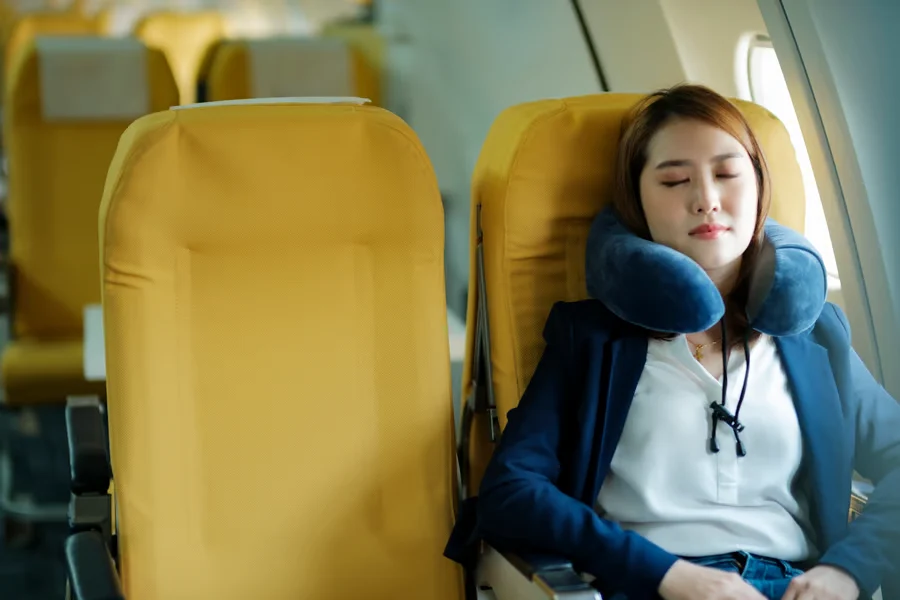
Memory foam neck pillow: Opt for contoured memory foam that supports your head at 90° angle.
Full-face mask: Blocks 100% of light; choose silk or breathable fabric.
Earplugs or noise-canceling headphones: Silence is non-negotiable.
Light blanket or large scarf: Bring your own merino wool or cashmere.
Hydration & Skincare
100ml water bottle: Fill post-security.
Facial mist: Spray every 2 hours.
Rich moisturizer: Apply every 4 hours.
Lip balm: Apply hourly.
Hand cream: Apply every 3 hours.
Eye drops: Use every 3 hours.
Comfort & Circulation
Compression socks: Wear entire flight.
Loose, layered clothing: No jeans, no tight belts.
Foot massage ball: Roll under feet for 5 minutes hourly.
Portable foot rest: Elevates legs 10–15°.
Wellness & Nutrition
Electrolyte tablets: Drop into water bottle.
Protein snacks: String cheese, almonds, protein bars.
Gum or mints: Reduces jaw tension, prevents dry mouth.
Medication kit: Magnesium, Melatonin, pain reliever, antacid, antibacterial wipes.
4. Best Seating Strategies to Maximize Comfort on Long Flights
Seat choice is 30% of in-flight comfort. Wrong seat equals 12 hours of suffering. Right seat equals 12 hours of rest. Here’s how to choose. These long-haul flight tips begin with seat selection.
Economy Class: Maximize What You Have
Choose aisle over middle: Easy bathroom access and leg extension.
Avoid exit row if you want sleep: Recline is limited.
Select front of cabin: Quieter and faster deplaning.
Book seats near wings: Most stable location.
Premium and Business Class
Premium Economy: Best value for comfort with extra width and recline.
Business Class: Features fully flat beds; worth it for 10+ hour flights.
First Class: Personal suites with maximum privacy and luxury.
5. How to Sleep Better on a Plane: Proven Tips and Techniques
Sleep on a plane is different from sleep at home. Cabin noise (85dB), dry air (10% humidity), and compression (90° seat) sabotage normal sleep patterns. But you can hack it. Mastering how to sleep on a plane is essential for how to prevent jet lag.
The Neurosurfing Method
Neurosurfing equals switching brainwave states intentionally. You force delta entry by using pre-flight meditation and onboard body-scan relaxation, then blocking distractions with a mask and earplugs.
Time Your Sleep
East flights: Sleep on plane to adjust to earlier bedtime.
West flights: Stay awake on plane to sleep at local bedtime after landing.
6. Staying Hydrated and Eating Right During Flights
Hydration plus nutrition equals 25% of jet lag prevention. Cabin air (10% humidity) dehydrates you 2x faster than ground. Poor food choices spike inflammation, worsening fatigue.
Hydration Protocol: Drink 1–2 liters per 10-hour flight. Sip every 15 minutes.
Eating Right: Avoid carb-heavy flight meals. Bring your own protein snacks (almonds, string cheese).
7. In-Flight Exercises to Prevent Stiffness and Improve Circulation
Sitting 12 hours equals circulation collapse. Blood pools in legs, muscles stiffen, risk of DVT rises 3x. But 10 minutes of movement every 3 hours reverses this.
Every 2 Hours Routine: Ankle pumps, leg extensions, seat raises, arm circles, and spinal twists.
Every 4 Hours: Hallway walk to activate full leg circulation.
8. Managing Stress, Anxiety, and Fatigue While Flying
Flight stress equals jet lag amplifier. Anxiety spikes cortisol, blocking sleep, worsening fatigue. Use box breathing and grounding techniques to maintain composure.
9. Post-Flight Recovery: How to Feel Refreshed After Landing
Landing is when recovery starts. First 24 hours determine jet lag duration. Do this right to know how to recover after travel and beat jet lag burnout.
Arrival Protocol (0–2 hours): Hydrate, stretch, walk, and seek 20 minutes of sunlight.
Adjustment Phase (2–6 hours): Eat and sleep at local times.
Reset Phase (6–24 hours): Maintain normal cycle, hydrate, and eat protein-rich meals.
Conclusion
How to prevent jet lag is not about magic—it’s about science, preparation, and consistency. By following these strategies for reducing jet lag, you transform long-haul flights from exhausting ordeals into restorative journeys. Understanding how long does jet lag last (3–5 days without prep, 1–2 with) motivates you to invest in preparation. Travel smart, sleep well: conquer jet lag. Your next adventure deserves a refreshed you.
10. FAQs
How do I avoid jet lag on long-haul flights? Prep 7 days before, sleep on plane, hydrate 1–2L, eat at destination times, and get post-flight sunlight.
What is neurosurfing for flight sleep? Switching brainwave states intentionally from beta to delta via meditation and body scans.
Best seat for avoiding jet lag? Front of cabin, aisle seat, near wings.
How much water to drink on long flight? 1–2 liters per 10 hours with electrolytes.
When to take melatonin for jet lag? Only east flights; take at destination bedtime.
Best in-flight exercises? Ankle pumps, leg extensions, seat raises, arm circles, spinal twists.
How to sleep on plane better? Mask, earplugs, pillow, blanket, and pre-flight neurosurfing.
Do compression socks prevent jet lag? Yes, by preventing DVT and swelling.
Best skincare for long flights? Hydrating mist, rich moisturizer, eye drops, and lip balm.
Should I eat flight meals? Only if balanced with protein; otherwise, bring your own snacks.
How to manage flight anxiety? Box breathing, grounding techniques, and arriving early.
Post-flight recovery timeline? 1–2 days with prep; 3–5 days without.
Best time to fly for jet lag? Overnight flights to align with circadian rhythms.
Can I drink coffee on long flight? No; it blocks melatonin and impairs rest.
How to reset circadian clock after flight? Sunlight, local meal times, and local bedtime.
Best supplements for jet lag? Melatonin, magnesium, Vitamin C, and electrolytes.
Do I need business class to avoid jet lag? No; premium economy plus smart prep works wonders.
How to prevent leg swelling on flight? Compression socks and hourly movement.
Best post-flight meal? Protein and vegetables; keep it light.
Why does jet lag happen? Circadian disruption, dehydration, and poor sleep quality.